
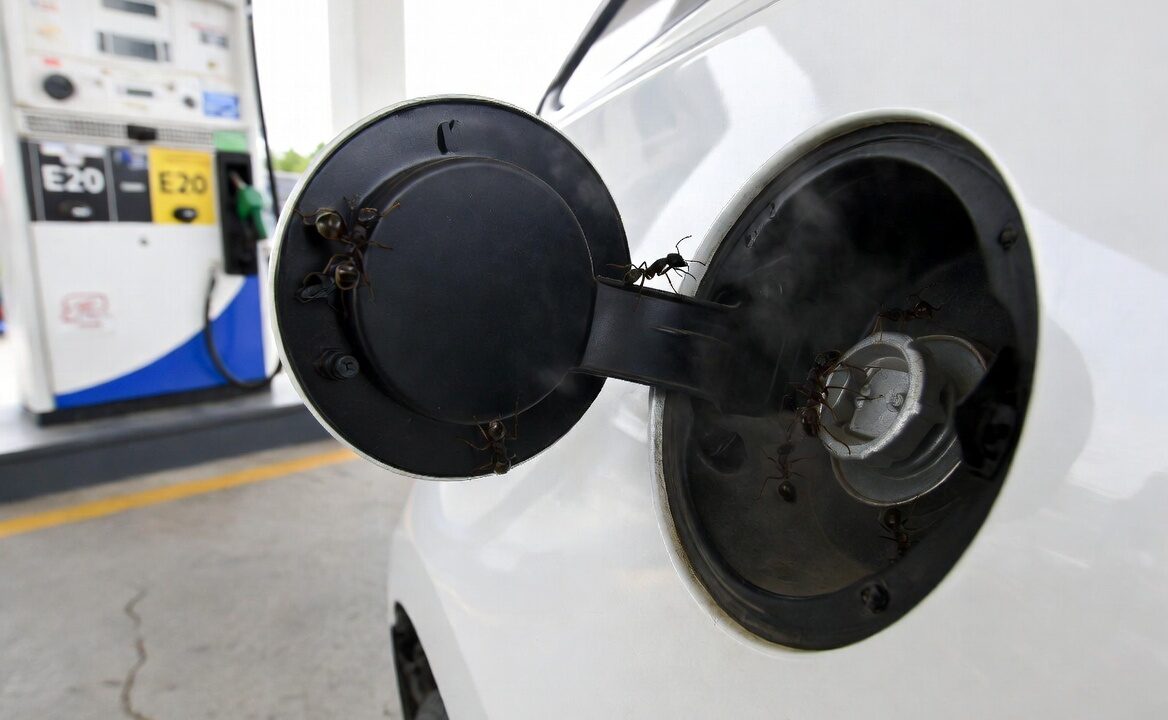
A video from Sikkim has been blowing up on X and Instagram. It shows hundreds of ants swarming around the fuel cap of a car right after it was filled with E20 petrol. People are joking that the petrol now literally contains “sugarcane juice.” Some are worried their cars will get invaded by insects. Others are using it to attack the government’s ethanol blending policy.
But what’s actually happening?
The Viral Video vs Reality
The clip is real. A vehicle in Sikkim was filled with E20 (20% ethanol blended with petrol), and ants immediately gathered at the fuel inlet. The internet’s first reaction was predictable: “Ethanol is made from sugarcane… so obviously ants are attracted to the sugar!”
Here’s the truth: There is almost no sugar left in the final ethanol. During production, sugarcane (or other crops) is fermented and distilled. What remains is nearly pure ethanol — the same compound found in alcoholic drinks. The sugar is long gone.
So why are the ants swarming?
The Actual Science
Ants are highly sensitive to certain chemical smells. Ethanol vapours have a distinct scent that many insects find attractive — similar to how they’re drawn to overripe fruit or fermented liquids. When you fill up with E20 and some petrol evaporates from the fuel cap area (especially in warm weather), tiny amounts of ethanol vapour escape. Ants detect it and come investigating. This isn’t new or unique to India. Similar incidents with ethanol-blended fuels have been reported in other countries. It’s a known (though minor) side effect of higher ethanol blends.
Why This Matters in India Right Now
India has aggressively pushed ethanol blending to:
– Reduce crude oil imports.
– Save foreign exchange (over ₹1.6 lakh crore reportedly saved so far).
– Give better prices to sugarcane farmers.
We moved from E10 to E20 nationally. E85 is also being introduced at select pumps. The policy has clear benefits. But it also creates real questions for vehicle owners:
– Older cars (pre-2010 models especially) were not designed for high ethanol blends.
– Some drivers report slightly lower mileage.
– Rubber and plastic components in older fuel systems can degrade faster over time.
The ants are just the visible, meme-worthy symptom of a bigger transition India is making.
What Should You Actually Do?
Here’s the practical takeaway:
Pro tip: After filling up, just give the fuel cap area a quick wipe. Most of the time, the ants lose interest within minutes.
The Bigger Picture
This viral video is funny… but it also highlights something important. India is rapidly changing its fuel ecosystem. The transition brings real advantages for the country and farmers, but everyday users are experiencing small side effects (ants, mileage questions, compatibility worries) that weren’t widely discussed before the rollout.
The ants didn’t read the policy document. They just followed their nose.
Final Thought
Next time you see a weird video like this trending, remember: the internet rewards those who create and resolve curiosity. The real value isn’t in laughing at the ants. It’s in understanding why they appeared — and what it actually means for the 234 million vehicles on Indian roads.
Have you noticed anything unusual after filling E20? Drop your experience in the comments — mileage change, any issues, or even ants showing up at your pump.
No responses yet. Be the first to reach this equilibrium state.